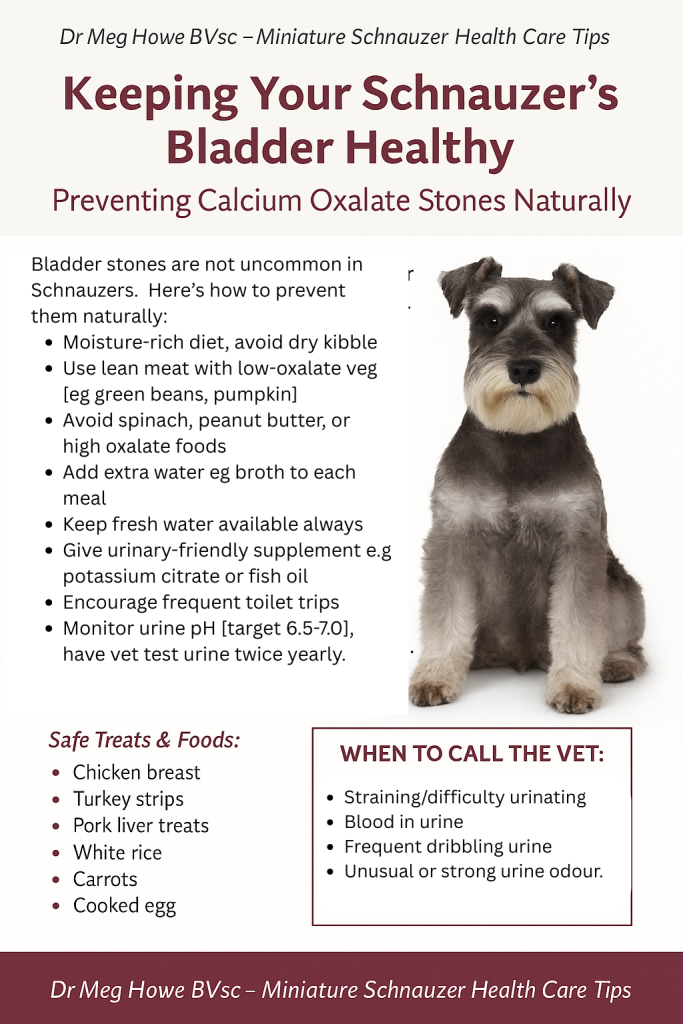
 Bladder stones in Schnauzers (urolithiasis) are not uncommon, especially calcium oxalate and, less commonly, struvite stones. Their tendency toward hyperlipidemia, concentrated urine, and sometimes a slightly acidic urine pH makes prevention particularly important.
Once diagnosed, they are usually surgically removed. After that, prevention typically involves feeding a commercial prescription diet kibble that is high in salt [to encourage drinking] and relatively low in protein. If – like many of our owners – you have been feeding a more natural diet, it might not feel comfortable to switch to processed food.
So here’s a comprehensive guide to natural and holistic preventive measures you can use safely in Schnauzers:
1. Identify the Bladder Stone Type (if any history)
Before you can prevent, you must know what kind of stones your dog is prone to:
-
Struvite stones form in alkaline urine and are often infection-related.
-
Calcium oxalate stones form in acidic urine, often with high calcium or oxalate excretion.
Mini Schnauzers are overwhelmingly calcium oxalate formers.
If you have prior stone analysis results, prevention can be more targeted.
2. Maximize Hydration
This is the single most effective natural preventive.
-
Fresh water always available (filtered if possible, to reduce mineral load).
-
Encourage frequent drinking: use pet fountains, flavor water with a teaspoon of low-sodium chicken broth, or feed wet foods.
-
Add moisture to meals: ¼–½ cup of warm water or broth to each meal.
-
Feed more often (smaller, moister meals promote more urination).
More dilute urine = lower crystal concentration = fewer stones.
3. Moist, Moderate-Protein, Balanced Diet
Avoid dry kibble as the main diet — it’s too dehydrating. For more info on feeding a healthy diet to your dog, go here.
There is scientific proof that a raw meaty bone based diet is best.
For calcium oxalate prevention, natural options include:
-
A balanced fresh or raw diet formulated for moderate calcium levels (avoid excess bone).
-
Lean meats, low-oxalate veggies (e.g., pumpkin, green beans, zucchini).
-
Avoid high-oxalate foods such as spinach, beet greens, sweet potatoes, almonds, and peanuts.
-
Include healthy fats (sardines, salmon oil) for anti-inflammatory effect and to support bladder lining health.
If infection-prone or struvite stones are a risk, avoid excess protein that raises urine pH.
4. Manage Urine pH Naturally
-
Ideal pH for calcium oxalate prevention: 6.5–7.0
-
For struvite prevention: aim slightly more acidic (6.0–6.5)
You can test at home with urine pH strips (morning sample).
Apple cider vinegar (a few drops in food) or cranberry extract can mildly acidify urine (good for struvite-prone dogs).
For oxalate-prone dogs, avoid over-acidifying — use mild alkalinizers like potassium citrate (your vet can guide dosage).
5. Supplements That Help
All-natural options with clinical or empirical support:
| Supplement | Benefit | Notes |
|---|---|---|
| Potassium citrate | Alkalinizes urine; reduces calcium oxalate crystal formation | Vet-recommended for known calcium oxalate formers |
| Omega-3 fatty acids | Anti-inflammatory; may protect bladder lining | 100–200 mg/kg EPA+DHA |
| D-mannose | Prevents bacterial adhesion; reduces infection risk (struvite prevention) | Especially useful for females |
| Cranberry extract | Acidifies urine and prevents bacterial attachment | Use standardized extract, not juice |
| Probiotics (esp. Lactobacillus reuteri) | Helps maintain urinary microbiome balance | |
| Magnesium and Vitamin B6 | May reduce oxalate crystallization | Avoid excess; best used under vet guidance |
6. Encourage Frequent Urination
-
Regular opportunities to go outside (every 3–4 hours during the day).
-
Avoid long overnight retention.
-
Exercise encourages water intake and urination.
7. Keep Weight and Lipids Under Control
Mini Schnauzers with hyperlipidemia have higher stone risk.
-
Maintain lean body condition (BCS 4–5/9).
-
Avoid fatty treats (cheese, sausages).
-
Consider periodic fasting days or omega-3 supplementation.
8. Regular Monitoring
-
Urinalysis every 6–12 months to check pH, specific gravity, and crystals.
-
Urine culture if infections recur.
-
Abdominal ultrasound or x-ray yearly for predisposed dogs.
Catching early crystal formation prevents emergency surgery later.
Things to Avoid
-
High-oxalate foods: spinach, beets, almonds, peanuts, sweet potatoes, rhubarb.
-
High-sodium treats (they increase calcium excretion).
-
Vitamin C supplements (metabolize to oxalate).
-
Dry-only diets and long periods without water access.
General Guides to Preventing Bladders Stones in Schnauzers
Preventing Calcium Oxalate Stones Naturally
What are Calcium Oxalate Stones?
Miniature Schnauzers are prone to forming calcium oxalate stones, especially if their urine is concentrated or too acidic. These stones develop silently and can block the bladder, so prevention is essential.
Daily To-Do List
- Always provide fresh water – encourage drinking with pet fountains or by adding a splash of broth.
• Feed moist food – add warm water or broth to meals.
• Avoid dry-only kibble.
• Keep weight lean – excess body fat increases risk.
• Offer plenty of toilet breaks to avoid urine build-up.
Diet & Supplements
- Base meals on lean meats, low-oxalate veggies (pumpkin, zucchini, green beans), and a small amount of white rice.
• Avoid spinach, beet greens, sweet potato, nuts, and high-calcium treats.
• Add Omega-3 oil daily and consider potassium citrate if advised by your vet.
• Keep meals moist – think ‘stew’ not ‘biscuit’.
Safe Treats
Lean cooked meat pieces, carrot sticks, apple slices (no seeds), freeze-dried fish.
Avoid salty, fatty, or cheese-based treats.
When to Call the Vet
See your vet immediately if your Schnauzer strains to urinate, passes blood, or seems unable to pee. Have a urine test done every 6–12 months to check pH and crystals.
Preventing Struvite & UTI Bladder Stones in Schnauzers Naturally
What are Struvite Stones?
Struvite stones usually form when bacteria cause the urine to become alkaline. They are more common in females and often linked to bladder infections. Keeping urine slightly acidic and infection-free is key.
Daily To-Do List
- Fresh, clean water always available.
• Feed moist food – add broth or water to meals.
• Take regular walks and toilet breaks to keep the bladder flushed.
• Keep your dog’s weight ideal – obesity increases infection risk.
Diet & Supplements
- Use a balanced, moist diet with moderate protein.
• Add natural acidifiers such as a few drops of apple cider vinegar or cranberry extract if recommended.
• Give D-mannose daily to help prevent bacterial attachment in the bladder.
• Probiotics with Lactobacillus can support a healthy urinary microbiome.
Safe Treats
Lean meats, low-sodium training treats, cucumber or apple pieces.
Avoid salty snacks, cheese, and processed meats.
When to Call the Vet
Contact your vet if your Schnauzer strains to urinate, has cloudy or strong-smelling urine, or leaks small amounts frequently. Urine should be checked twice a year to catch issues early.
Return from Bladder Stones in Schnauzers to Schnauzer Health Issues