Is Raw Chicken Safe for Dogs? What Owners Need to Know About Salmonella, Kibble, and Raw Feeding
One of the most common concerns people have about feeding dogs a raw diet is the risk of salmonella, especially when raw chicken is involved.
And it is a fair question.
After all, we have been taught to be very careful with raw chicken in the kitchen. So naturally, many dog owners wonder whether feeding raw chicken, raw meaty bones, or a BARF-style diet could put their dogs at risk.
The answer is not quite as simple as “raw meat is risky and kibble is safe.”
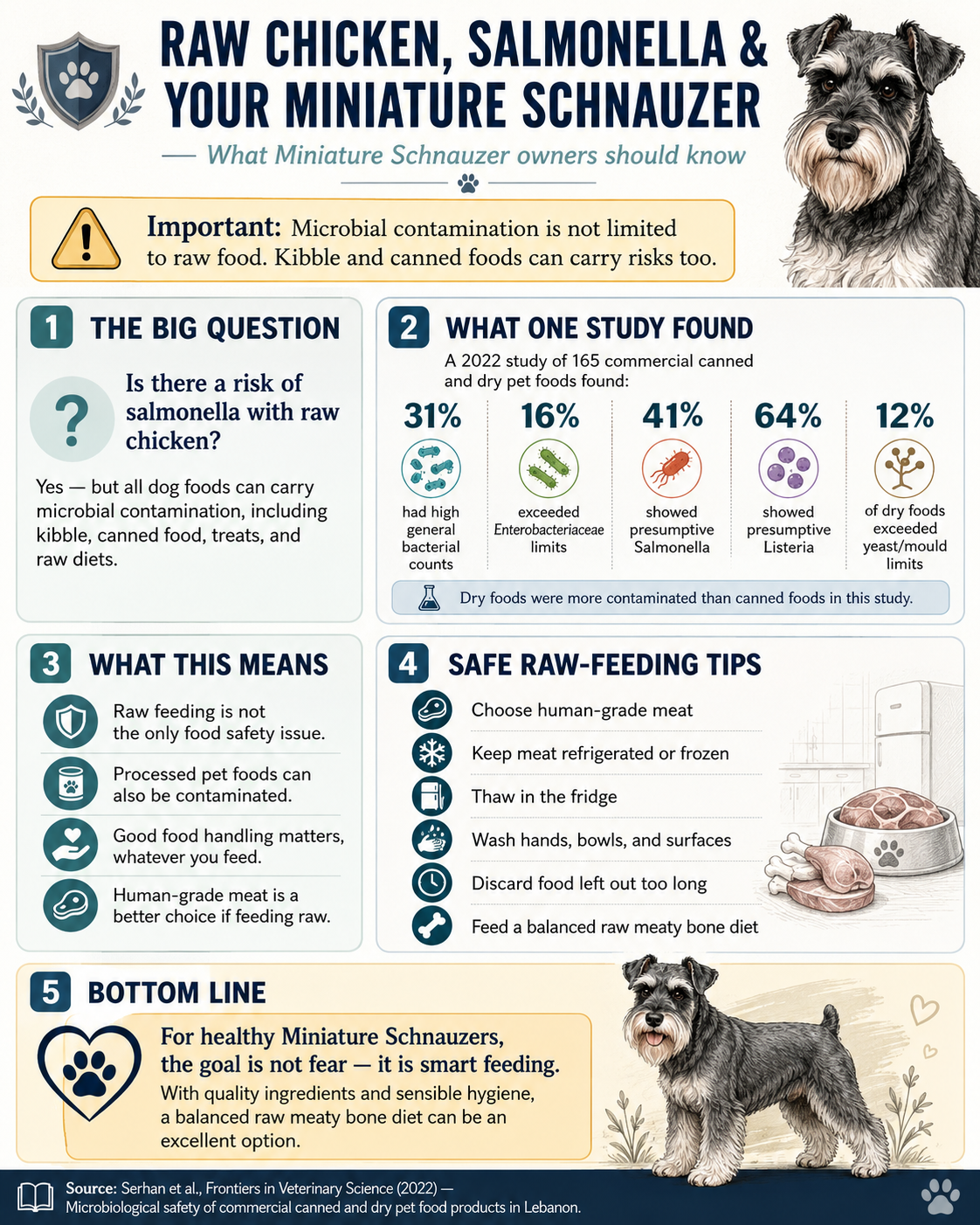
The reality is that all dog foods carry some risk of microbial contamination, including dry kibble, canned food, and raw food.
A 2022 study published in Frontiers in Veterinary Science examined 165 commercial canned and dry pet food products and found contamination in a number of samples, including elevated general bacterial counts, Enterobacteriaceae, presumptive Salmonella, presumptive Listeria, and yeasts and moulds. The researchers reported that dry pet foods had higher contamination levels than canned foods, and they detected presumptive Salmonella in 41% of the tested brands and presumptive Listeria in 64% of brands.
This is important because many people assume that commercial dry food is sterile or automatically safer than fresh food. It is not.
Kibble Can Also Carry Bacteria and Moulds
Dry food is often seen as the “safe” option because it is processed at high temperatures. But once manufactured, kibble can still be contaminated during handling, packaging, transport, storage, or after the bag is opened at home.
The same study found that some dry pet foods contained microbial loads above accepted limits, including Enterobacteriaceae and yeasts and moulds. Mould contamination is particularly concerning because some moulds can produce mycotoxins, which are toxic compounds that may damage health over time.
So while people often focus on salmonella in raw chicken, it is important to understand that microbial contamination is not unique to raw feeding.
It can occur in kibble.
It can occur in canned food.
It can occur in treats.
And yes, it can occur in raw food too.
What About Salmonella in Raw Chicken?
Raw chicken can contain salmonella, just as raw chicken purchased for human consumption can. That is why sensible food hygiene matters.
However, dogs are not humans. A healthy dog has a digestive system designed to handle a higher bacterial load than we can. Their stomach acid is strong, and their digestive tract is shorter, which helps them process raw animal foods efficiently.
That does not mean we should be careless. It simply means we should be practical.
When feeding raw, use human-grade meat, store it correctly, thaw it safely, wash hands and surfaces, and discard anything that smells off or has been left out too long.
In our feeding program, the raw chicken and all meat used is human grade. That matters. Human-grade meat has been processed and handled to a standard suitable for human consumption, rather than being lower-grade animal feed material.
Raw Meaty Bone-Based Diets and Canine Health
Dogs are carnivores by design. They thrive on animal-based nutrition, and many breeders have seen the benefits of feeding a carefully balanced raw meaty bone-based diet.
These benefits may include:
Improved coat condition.
Cleaner teeth.
Smaller, less smelly stools.
Better muscle tone.
Improved vitality.
Better appetite and food enjoyment.
A raw meaty bone-based diet aims to provide dogs with the type of nutrition they are biologically suited to: meat, bone, fat, connective tissue, organs, and appropriate additional ingredients when needed.
That is very different from a diet built primarily around highly processed starches and plant-based fillers.
For more on why dogs are not designed to thrive on vegan diets, you can read my article here.
Sensible Safety Practices for Raw Feeding
If you feed raw chicken or any raw meat, basic hygiene is essential.
Keep raw meat refrigerated or frozen until needed.
Thaw it in the fridge rather than on the bench.
Wash your hands after handling it.
Clean bowls, knives, chopping boards, and benches thoroughly.
Do not leave raw food sitting out for long periods.
Source the best quality meat you can.
These are the same precautions you would take when preparing raw meat for your family.
The Bigger Picture
The question should not be, “Is raw chicken completely risk-free?”
No food is completely risk-free.
A better question is, “What is the healthiest and most biologically appropriate way to feed dogs, while managing risk sensibly?”
In my view, a properly prepared raw meaty bone-based diet, using good-quality human-grade ingredients and sensible hygiene, is one of the healthiest ways to feed dogs.
Commercial kibble and canned foods are not automatically free from bacteria, salmonella, listeria, or mould contamination. The evidence shows that contamination can occur in processed pet foods too.
So rather than being frightened away from raw feeding by the word “salmonella,” breeders and dog owners should look at the whole picture.
Dogs need species-appropriate nutrition.
They need real food.
And when raw feeding is done properly, with quality ingredients and good hygiene, it can be an excellent foundation for long-term health.